Research

We build and analyze agent-based models, such as recurrent neural network controllers trained with deep reinforcement learning, to study natural behavior and the neural dynamics that generate it. Like digital twins, these models allow rapid hypothesis testing in silico while staying fully observable. We also develop theory and methods to interpret and compare such networks, and apply the broader machine learning and simulation toolbox to problems in biology and medicine.

The most up-to-date list of our publications is on Google Scholar, sorted newest first.

Agents and simulation

Building embodied and multi-agent models to study behavior, interaction, sensing, signaling, and adaptation.

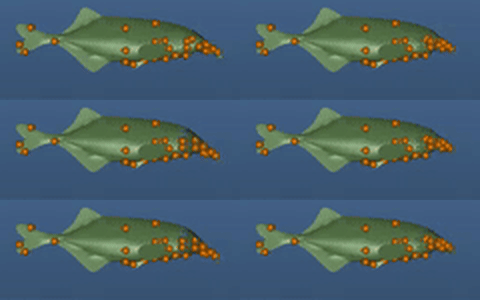
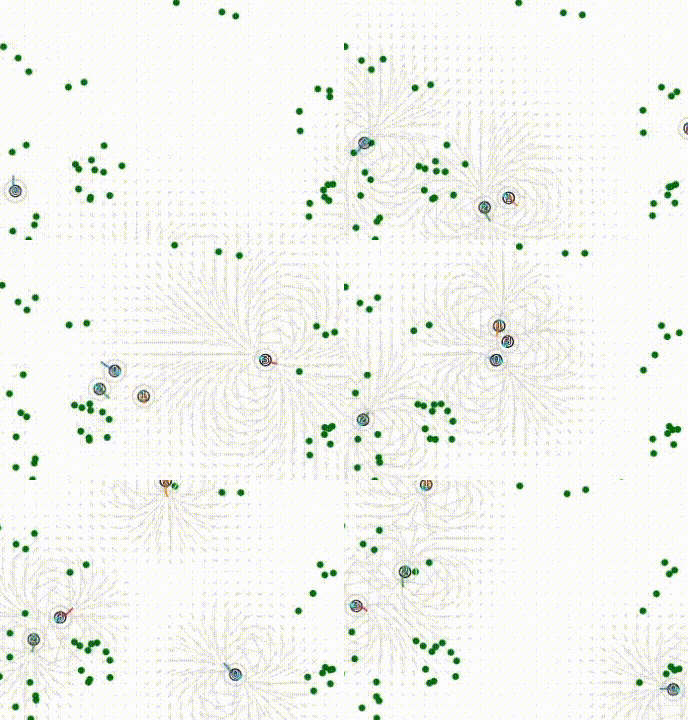
Simulated weakly electric fish agents foraging together, with their electric fields drawn around them

Weakly electric fish collectives

Multi-agent RL agents that sense their surroundings and signal to each other with self-generated electric fields, modeled on weakly electric fish. A 3D biomechanical body model is in progress.
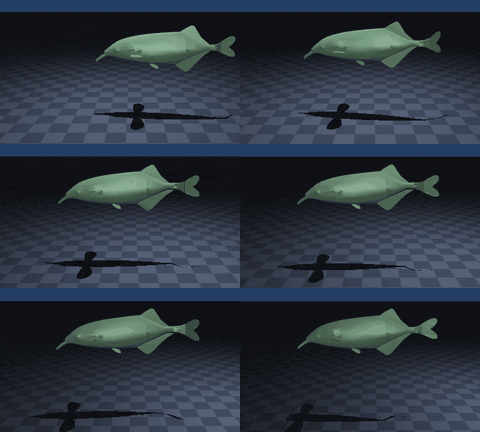
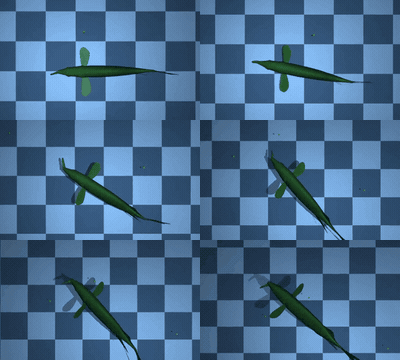
3D fish model swimming forward 3D fish model performing learned turns 3D fish model with electrosensors on its body

RLDM 2025, spotlight talk · NeurIPS 2025 workshop
Simulated larval zebrafish agent hunting prey

Larval zebrafish hunting

Deep RL agents with recurrent networks, trained to hunt prey, are used to dissect the hunting behavior of larval zebrafish.

CCN 2026 · NeurIPS 2025 AI4Science workshop, spotlight

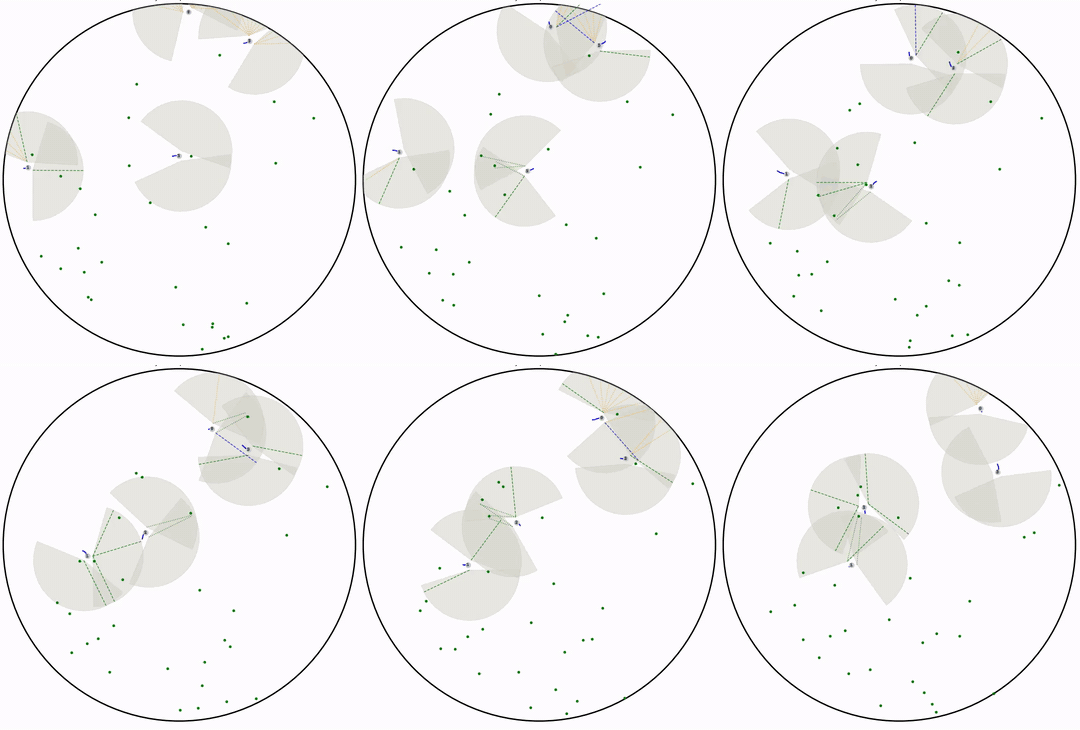
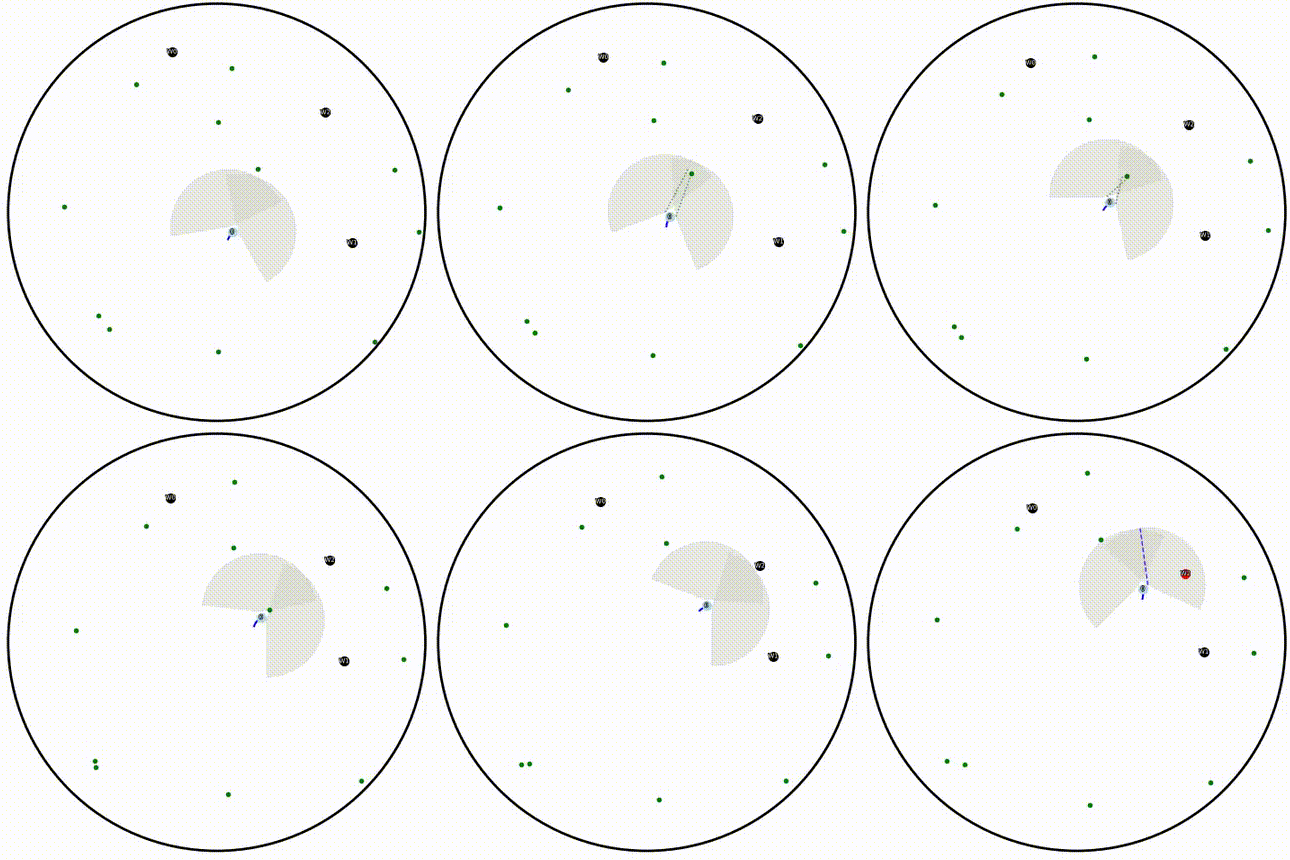
Group of simulated zebrafish agents foraging, with their visual fields drawn

Zebrafish collective behavior

How collision avoidance and the distribution of food shape collective foraging in groups of fish agents.

CCN 2026

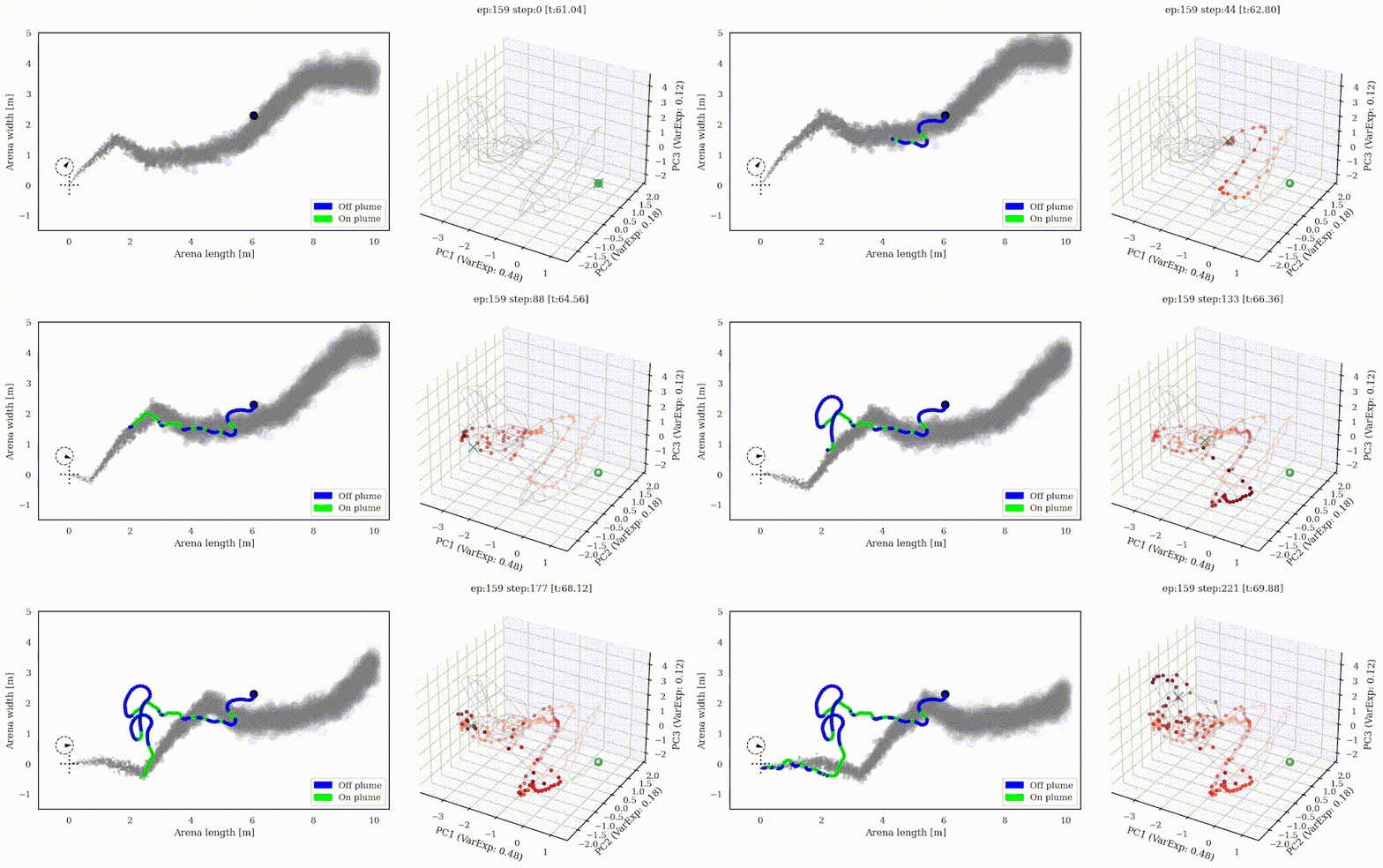
Agent tracking a turbulent odor plume, alongside its neural activity in three dimensions

Turbulent plume tracking

Insect-like agents trained with deep RL to track turbulent odor plumes. Their behavior resembles that of flying insects, and their recurrent networks learn to compute task-relevant variables with distinct structure in population activity.

Multi-level mechanistic interpretability, before it had a name: the agents were analyzed at the levels of behavior, computation, and neural dynamics together, the way a neuroscientist would study an animal (preprint, 2021). The work is now a canonical NeuroAI example in the Neuromatch NeuroAI course.

Nature Machine Intelligence, 2023 · cover feature

Also: Neuroprospecting with deep RL agents, an essay on what AI and neuroscience can learn from each other · NeurIPS 2021 workshop

↑ Back to research themes

Neural computation

Understand what recurrent networks and biological circuits compute, how they implement it dynamically, and why different solutions emerge.

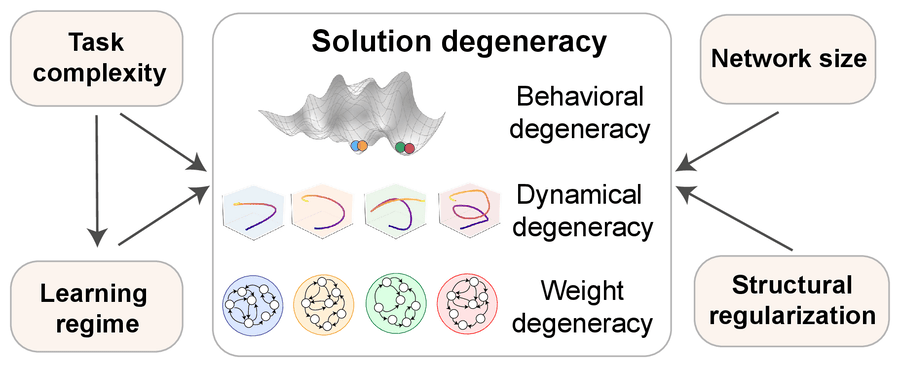
Schematic: task complexity, learning regime, network size, and structural regularization control behavioral, dynamical, and weight degeneracy

Solution degeneracy in RNNs

Measuring and controlling how differently task-trained recurrent networks solve the same task.

NeurIPS 2025, spotlight

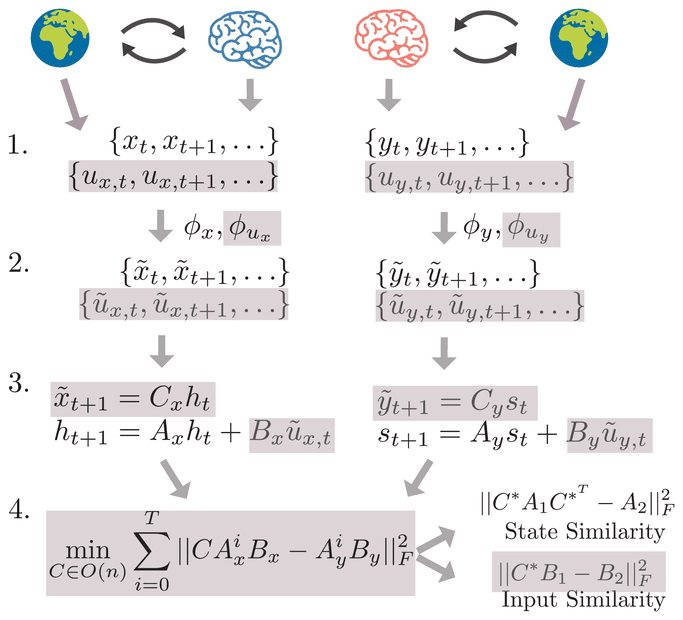
InputDSA method: data from two brain-world systems are embedded, fit with input-driven state-space models, and compared on state and input similarity

InputDSA

Demixing recurrent from input-driven dynamics, so that neural systems can be compared on each separately.

ICLR 2026 · CoSyNe 2026, oral

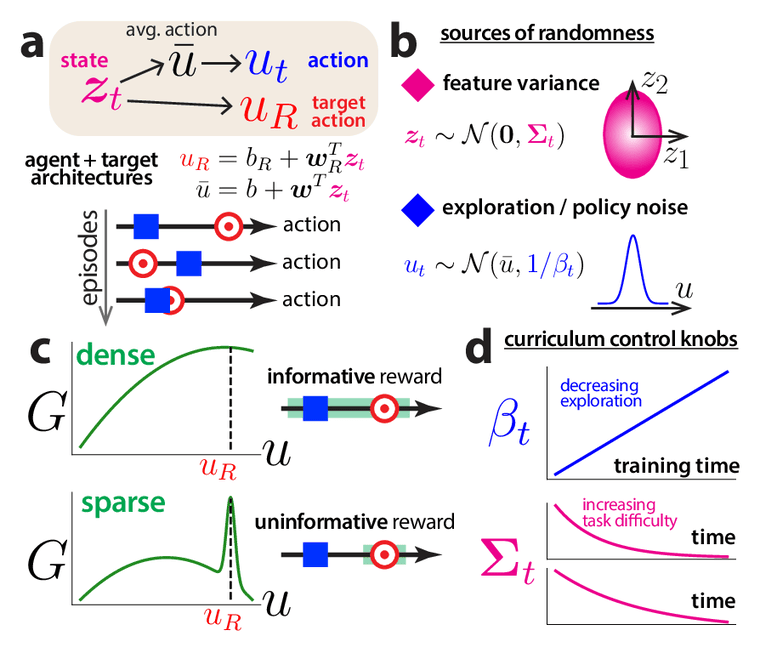
Schematic of the policy-learning model: sources of randomness, dense versus sparse rewards, and curriculum control knobs

When curriculum learning helps

The benefit of curricula in reinforcement learning depends on reward sparsity and on competing optima.

NeurIPS 2026

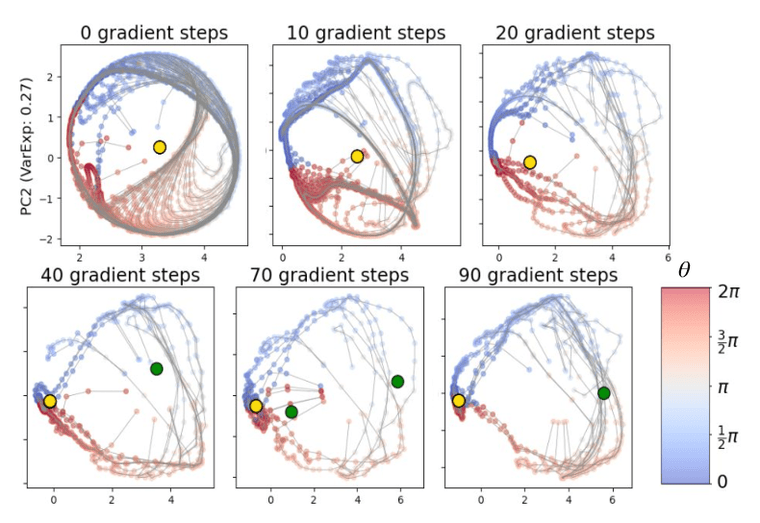
Recurrent network activity in its top two principal components at six points in training, pruning into a ring as fixed points emerge

Geometry of neural dynamics in RL controllers

As an RL controller learns to balance a pendulum, training prunes its recurrent dynamics into a ring that encodes the pendulum's angle, and stable and unstable fixed points emerge in turn.

RLC 2024 workshop, talk

↑ Back to research themes

AI for Science & Medicine

Learn predictive models from biological and biomedical data, especially when dynamics, interventions, and uncertainty matter.

Pose tracking of a patient's wrist movements in long-term hospital video, from the J. Neuroscience Methods paper

Naturalistic human brain and behavior

Most studies of human movement use short, scripted lab tasks. We instead mined weeks of continuous intracranial recordings and video from hospitalized patients for natural, unscripted movements, using pose tracking to find and annotate thousands of arm movements automatically (the clip above, from the J. Neuroscience Methods paper).

J. Neuroscience Methods, 2021 · eNeuro, 2021 · Scientific Data, 2022

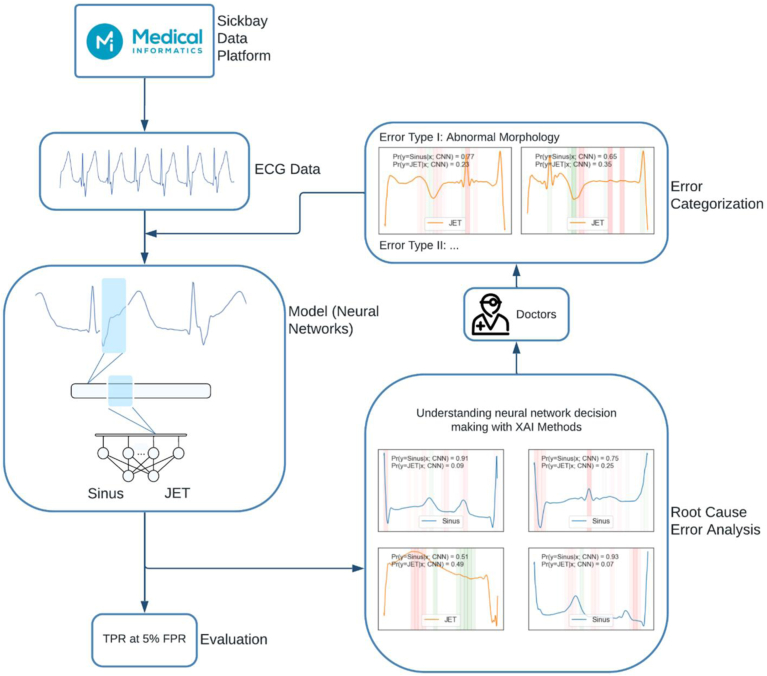
Model development pipeline: ECG data, neural network classifier, explainability analysis, and error categorization by doctors

Uncertainty-aware arrhythmia detection

Multimodal deep learning with ensemble-based uncertainty to detect junctional ectopic tachycardia in pediatric cardiac ICU patients.

Heart Rhythm O2, 2024

Figure: Ju et al., Heart Rhythm O2 (2024), CC BY-NC-ND 4.0

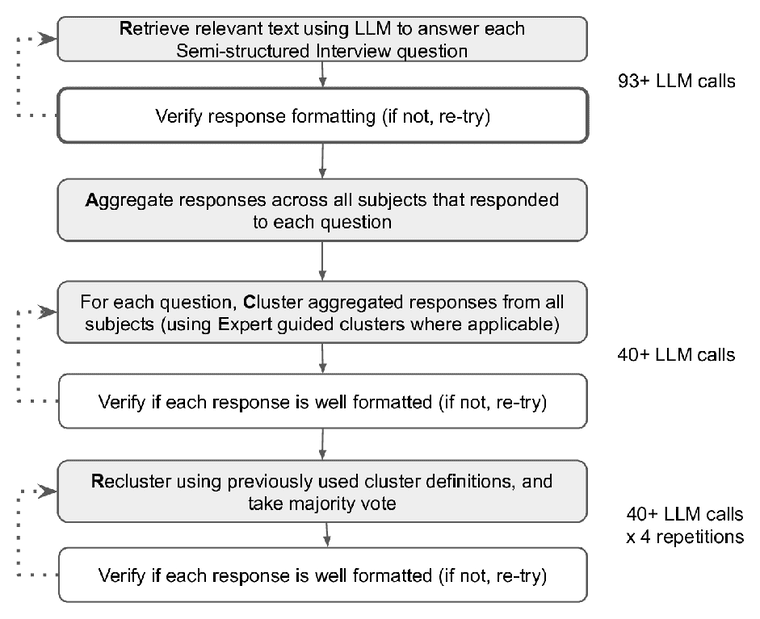
RACER pipeline: retrieve, aggregate, cluster with expert guidance, and re-cluster interview responses using an LLM

Auditable LLMs for clinical interviews

RACER: an LLM-powered method for scalable, auditable analysis of semi-structured mental health interviews.

EMNLP 2024 NLP4Science workshop

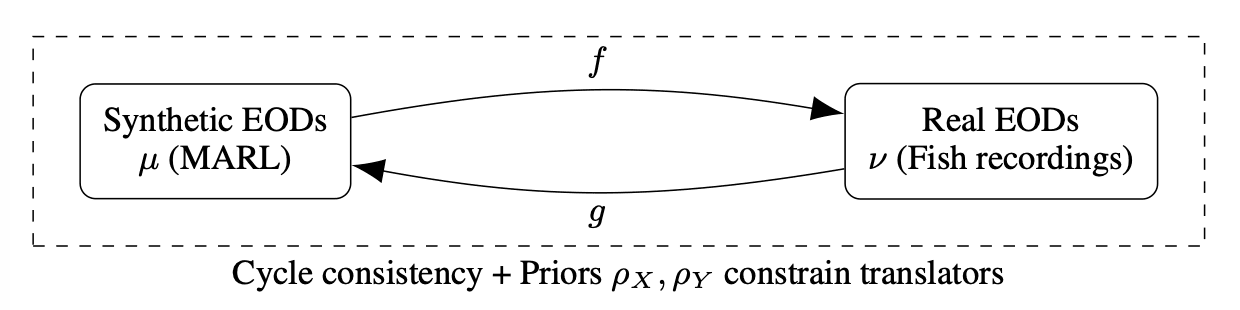
Translators f and g map between synthetic electric signals from multi-agent RL and real fish recordings, constrained by cycle consistency and priors

Translating electric-fish communication

A proposal to decipher electric-fish signals with unsupervised machine translation between signals from multi-agent RL agents and recordings of real fish, constrained by cycle consistency.

NeurIPS 2025 AI for Animal Communication workshop

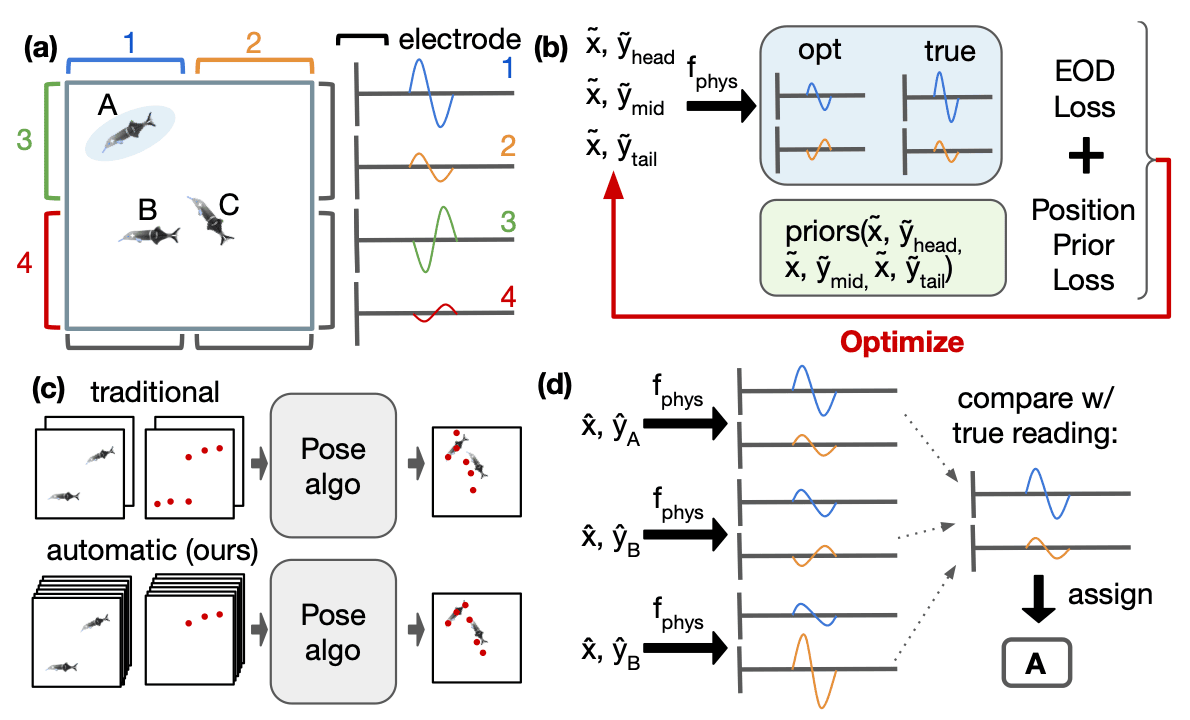
Physics-based source separation: fish positions are optimized so simulated electrode readings match recordings, then signals are assigned to individual fish

Who said that? Source separation for electric fish

Using a physics model of the electric field to find where each fish is and which fish produced each signal, so that pose annotations and signal attribution can be automated.

NeurIPS 2025 AI for Animal Communication workshop

Also: binding affinity and gene regulatory network evolution · ALIFE 2023

More papers, code, talks, and helpful links are on Satpreet (Sat) Singh's research page → and Google Scholar.

↑ Back to research themes